What is Off-Page SEO? The 2026 Guide to the Benefits of Authority Building and AI Citations
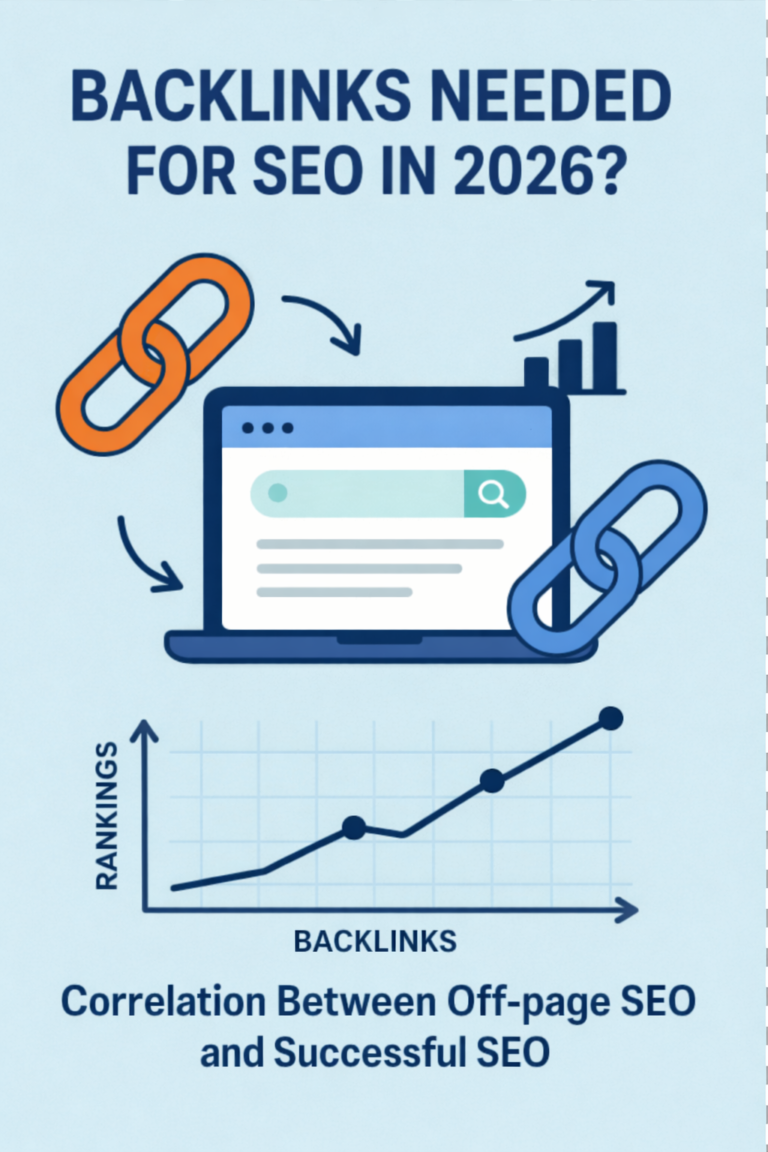
Off-page SEO is a crucial element of small business seo, covering everything you do outside your own website to help it rank better on search engines and appear in AI-generated summaries. When Google first came onto the scene, it stood out from other search engines because it used a system called PageRank. This system looked at how many links a page had, and how trustworthy those links were, to figure out how relevant a page was for certain searches. I mean, it makes sense; every link acts as a vote of confidence, and links from more trustworthy sites lead to better rankings and traffic Because of this, links have always been a strong signal for Google. In 2026, this has expanded into “Digital PR” and “Brand Mentions.” Today, off-page SEO helps build your site’s “Entity Authority,” which is a primary driver for Google’s E-E-A-T (Experience, Expertise, Authoritativeness, and Trustworthiness) guidelines. They help build your site’s authority and trustworthiness, which can lead to higher rankings and more visitors from search.
Are Backlinks Still Important in 2026?
This is the question every business owner asks as AI search dominates the landscape. The answer is a resounding yes, but their role has shifted from being “votes” to being “verifiers.” This 2026, Google started using backlinks to verify the real-world accuracy of what your AI-generated content is claiming. Without off-page validation, Google’s algorithms view your content as unverified “AI noise.” According to recent industry studies by Ahrefs, there is still a 0.82 correlation between the number of unique linking domains and search traffic. However, the weight has shifted toward “Referral Intent.” If a link is never clicked by a human, its value in 2026 is significantly lower than a link that drives actual traffic. Backlinks are more important than ever for:
- AI Overview (AIO) Inclusion: Google’s AI is more likely to cite your site as a source if you have high-authority “Entity” links from established industry leaders.
- Combating AI Hallucinations: If your brand is linked to by trusted scientific or educational institutions, Google’s Knowledge Graph treats your data as the “Truth Set,” protecting your rankings from being displaced by incorrect AI summaries.
Indexing Speed: With the sheer volume of content being published in 2026, Google uses quality backlinks as a priority signal for crawling. Sites without an off-page footprint are often indexed weeks later than those with active link profiles.
Correlation Between Off-page SEO and successful SEO
There’s no denying that a strong correlation exists between backlinks and website rankings. In other words, sites with more high-quality backlinks tend to rank higher in search engine results. However, this relationship often leads to a common question: Does having more backlinks cause higher rankings, or do higher-ranked sites naturally attract more backlinks? This is the classic “chicken or the egg” dilemma in SEO. Regardless, the fact that link building is a billion-dollar industry speaks volumes, it wouldn’t be such a massive market if it didn’t work. Quality backlinks remain a critical factor in establishing authority and trustworthiness in the eyes of search engines. According to recent data from Backlinko, the number of domains linking to a page remains one of Google’s top ranking signals, even in the age of AI search. As an SEO specialist who works across 20 different websites at any given time, the results from off-page emphasised strategies speak volumes, and I have seen very strong isolated results where no on-page or technical changes have been made, purely links. The graph below also clearly illustrates this impact: 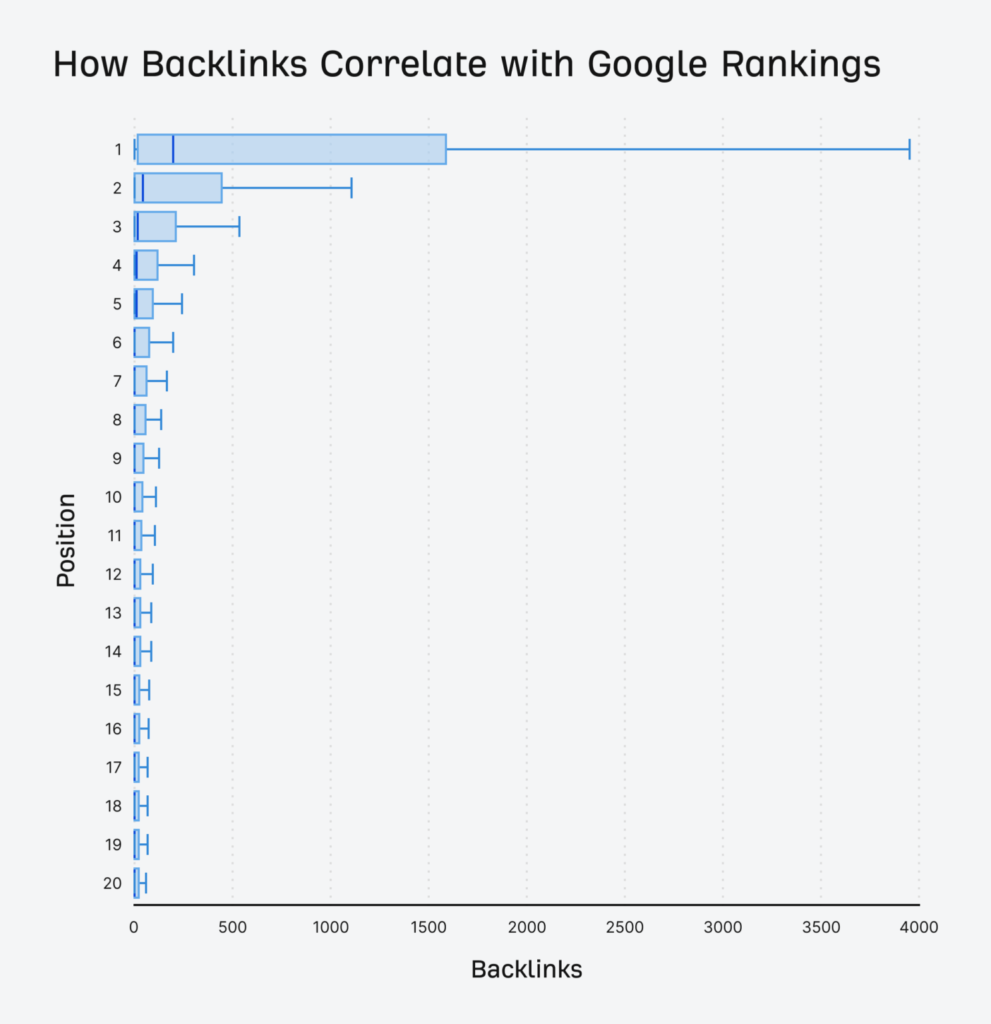 Links matter less, but still matter – by Ahrefs
How Many Backlinks Are Needed?
The honest answer: it depends. There’s no universal “magic number” of backlinks that guarantees rankings, because every industry, keyword, and competitor landscape is different. In 2026, we focus less on the “quantity” of links and more on the “Authority Gap.” If your competitors are being cited by major industry publications and you aren’t, you have a trust gap that no amount of on-page content can fix.
When off-page SEO isn’t needed
There are times when off-page SEO isn’t a major priority. This is often the case for large enterprise websites that already have strong authority and a healthy backlink profile. In these situations, technical SEO and on-page optimisation are usually the bigger levers for improving rankings. This is where having an experienced, unbiased SEO consultant matters, they can create a tailored strategy based on the specific gaps and needs of your website, rather than applying a one-size-fits-all approach.
When Off-Page SEO Works Best
Local Businesses
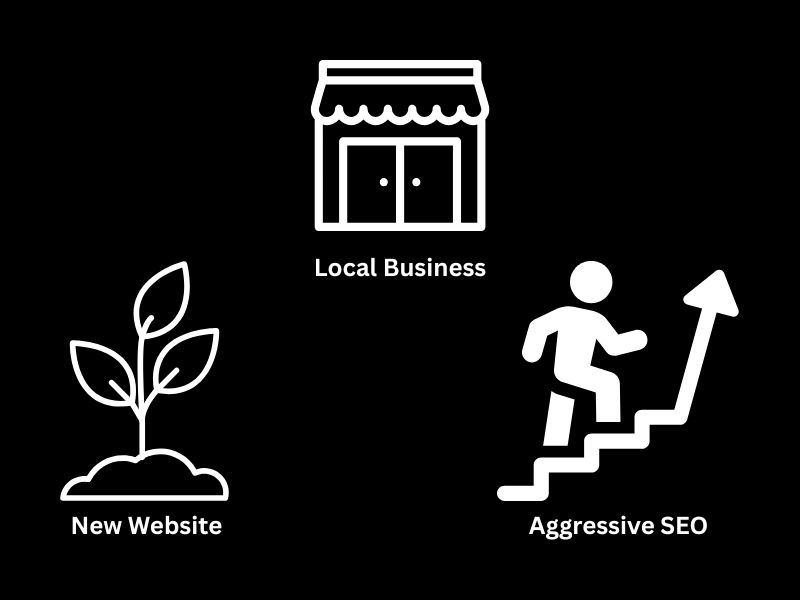
Local businesses often have less natural authority, making off-page SEO a powerful way to compete. Building quality local and industry-relevant links can significantly improve rankings, especially in local search results. Directory links, in particular, can support both lead generation and local SEO by ensuring a consistent NAP (Name, Address, Phone number) across the web, which also strengthens your Google Business Profile performance.
New Websites
Fresh websites will have zero authority and no link history. Link building should play a major role in your strategy and SEO’s resource allocation. For new sites, off-page SEO acts as a “discovery signal” for Google, helping the algorithm index your pages faster and understand what your site is about. Unfortunately, this usually means a larger SEO cost to catch up to your competitors with backlinks.
Aggressive Traffic Goals
If you operate in a competitive market or have ambitious SEO goals (as most businesses do) link building should be a core part of your strategy. It’s essential for scaling, improving indexation, and boosting overall visibility
Most Important Things to Look Out for in Links
When evaluating backlinks, it’s not just about the volume or number. A variety of other factors play an important role in the success of your SEO. The wrong links can do more harm than good. In fact, investing in spammy backlinks is one of the most dangerous mistakes in SEO. Not only can they fail to deliver results, but they can also undermine all the other optimisation work you’ve done.
Are they Indexed
A link isn’t worth much if Google can’t see it. Before counting a backlink as a “win,” make sure the page it’s on is actually indexed in Google. If it’s not in the index, it won’t pass any real value to your site. Common links that won’t get indexed are private blog networks (PBNs) and most web 2.0 links. These types of links will not have the same weighting as other links 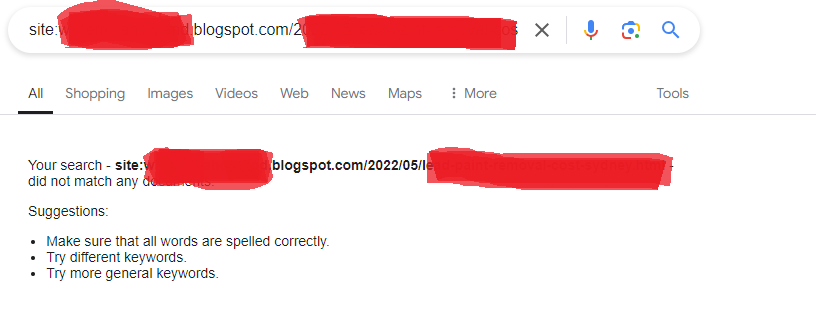
Does the Linking Page Have Traffic (and Sustained Traffic)?
A backlink from a page that actually receives consistent visitors is much more valuable than one from a page with little or no traffic. Search engines now prioritise “referral traffic” as a signal of link quality. If a human never clicks the link, Google increasingly views it as less valuable. Sustained traffic over time shows that the page is trusted and relevant, which means the link passing from that page carries more authority and SEO benefit. Although this isn’t always necessary, the quality of the traffic will be a much more important factor then the quantity.
Is it Relevant
Niche relevance is now the #1 factor in link quality. A single link from a relevant industry blog is worth more than ten links from generic news sites. This is because Google uses these links to build your Knowledge Graph entity. Discuss how important metrics are the niche relevance and diversification of links. Another thing for relevancy is the diversification of the text for the link, often called the anchor text. It is important to have diversified anchor texts with most SEO’s agreeing that about 50% of your link texts should be brand, and no more than 10% should be keywords.
The Rise of Brand Signals and Social Search
Off-page SEO is no longer just about the hyperlink. Brand search volume, how many people actually search for your name on Google, is now a massive ranking signal. If people are talking about you on Reddit, TikTok, or niche forums, Google treats those “unlinked mentions” as a vote of confidence in your brand’s real-world footprint. This shift means that authority is built through a diverse digital presence. For many, this starts with a foundation of specialised small business SEO strategies that focus on local relevance and brand recognition before scaling to broader markets.
- Digital PR: Getting mentioned in major news outlets to establish authority.
- Podcast Guesting: Building voice authority and generating branded search queries.
- Niche Forum Engagement: Establishing presence where AI models like OpenAI’s o scrape data to understand user sentiment.
By integrating these tactics with professional link-building services, you ensure that your brand isn’t just a quiet participant in the conversation, but the authoritative entity that search engines—and AI models—prioritise.
Information Gain and Link Diversity
Google’s 2026 algorithm updates heavily weight “Information Gain.” This means a link from a site that provides new or unique data is far more valuable than a link from a site that just rehashes existing content. Off-page SEO now involves creating unique studies or data points that others want to reference. If your off-page strategy is just “buying a guest post,” you’re missing out on the Information Gain scores that now propel pages to the top of AI Overviews.