Reviews and SEO: Do Customer Reviews Really Help Your Rankings?
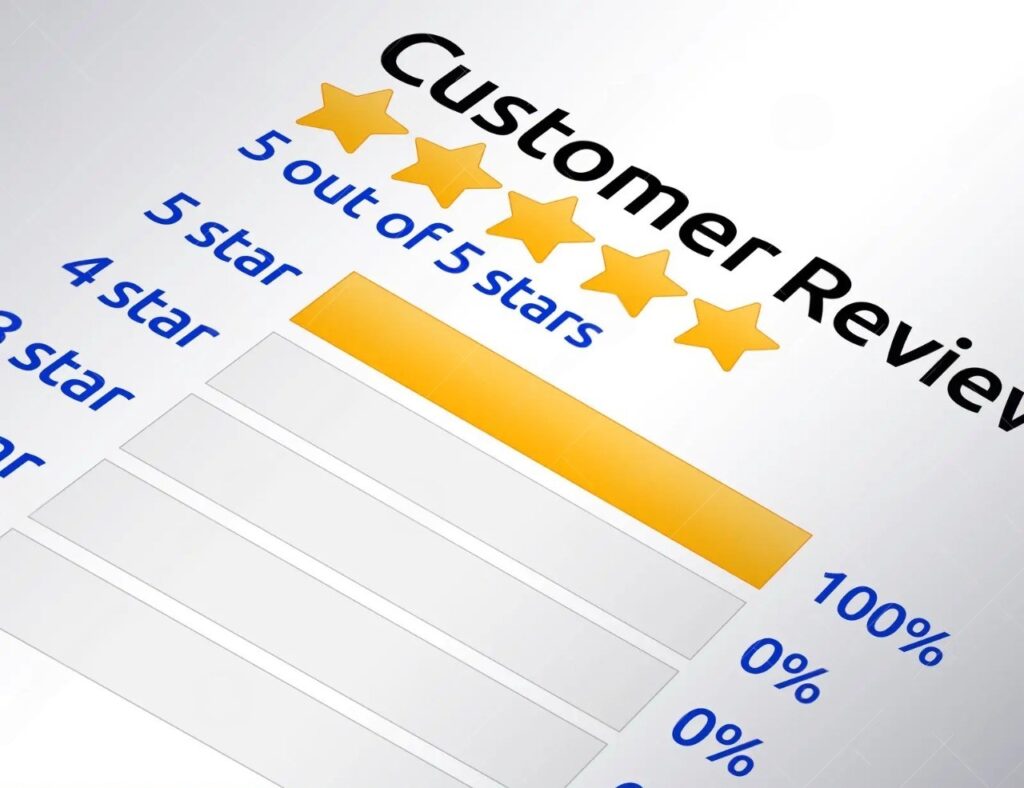
Reviews and SEO are tied together more closely than most small business owners realise. You already know reviews build trust. A five-star rating makes people more likely to call you, book you, or walk through your door. But there’s a second job those stars are doing quietly in the background: helping you show up on Google in the first place. The catch is that the truth sits somewhere between two extremes. Some people treat reviews as a magic switch that fixes everything. Others wave them off as just good manners. Neither is right. So let’s clear it up. In this guide we’ll explain how reviews actually affect your search rankings, why they work a lot like backlinks do, exactly where they help, and where the hype runs ahead of the facts. By the end, you’ll know what reviews can and can’t do for your SEO, and how to make the most of them.
The Short Answer
Yes, reviews help your SEO. But mostly in one specific place: local search. When someone searches for a business “near me” or in a particular town, Google shows a map with a short list of businesses above the normal results. That box is called the local pack, and reviews are one of the biggest things deciding who lands in it. Beyond local search, reviews still pull their weight. They make people more likely to click your listing and more likely to become customers once they do. They just don’t work as a direct lever for your normal website rankings in the way many people assume. We’ll explain the difference as we go.
What “Reviews and SEO” Actually Means
SEO is the work of helping your business show up higher on Google. Reviews are the ratings and written feedback customers leave about you, most often on your Google Business Profile, but also on places like Facebook and industry directories. “Reviews and SEO” simply means the link between the two. It’s the question of whether all those stars and comments do anything to change where you appear when someone searches for what you sell. As it turns out, they do, and the reason why becomes clear once you compare them to something most people have heard of: backlinks.
How Reviews and Links Both Build Trust
Google’s whole job is to figure out which businesses to trust. It can’t visit your shop or test your service, so it looks for signals from the outside world. Two of the most important are links and reviews, and they work on the same basic idea.
- A backlink is a vote from another website. When a respected site links to yours, it’s vouching for you, and Google counts that as a point in your favour.
- A review is a vote from a customer. When real people rate you well, it tells Google that actual humans trust your business.
Both are forms of third-party proof. You’re not telling Google you’re good. Other people are. That’s far more convincing, which is why Google leans on both. Here’s the key difference, though, and it matters:
| Backlinks | Reviews | |
| Who gives the vote | Other websites | Your customers |
| Mainly affects | Your whole website’s rankings | Your local rankings |
| Best for | Organic search across the board | The local pack and Google Maps |
So reviews and links are cousins, not twins. Links help lift your site broadly. Reviews do their strongest work in local search.
Where Reviews Actually Help Your SEO
Reviews pull three different levers. Two of them are about being seen, and one is about turning that visibility into customers.
1. Your Local Rankings
This is where reviews matter most, and it’s not guesswork. Google’s own Business Profile guidance confirms that review count and review score factor into local search ranking. Google decides local rankings on three things: relevance (how well you match the search), distance (how close you are), and prominence (how well-known and trusted you are). Reviews sit squarely in that last bucket. The more genuine, positive, recent reviews you have, the more prominent and trustworthy you look.
2. Your Click-Through Rate
Even before anyone visits your site, reviews are working. When your listing shows a row of gold stars and a healthy review count, it stands out, and listings with star ratings and review snippets capture more attention, leading to higher click-through rates. That matters twice over. More clicks means more customers, and a listing that consistently earns clicks also signals to Google that people find it useful, which can reinforce your ranking over time.
3. Trust and Conversions
The final lever is the one that pays the bills. A strong set of reviews makes people choose you over the business listed next to you. They are social proof, and they answer the quiet question every customer is asking: can I trust these people? This is also part of what Google calls E-E-A-T, its shorthand for experience, expertise, authoritativeness, and trust. Genuine reviews from real customers are a clear, outside signal that your business delivers. They won’t single-handedly lift your website rankings, but they strengthen the overall picture of a business worth trusting.
Which Review Signals Matter Most
Not every review carries the same weight. Google looks at several things, not just your average score. Here’s what each one does:
| Signal | What it means | Why it matters |
| Volume | Your total number of reviews | More reviews read as more proof you’re established and trusted |
| Rating | Your average star score | A higher rating builds trust and unlocks “top rated” placements |
| Recency | How fresh your latest reviews are | Recent reviews show you’re active now, not popular years ago |
| Velocity | How steadily new reviews come in | A regular trickle beats a one-off burst followed by silence |
| Keywords | The words customers use | Mentions of your service or town become indexed content that helps relevance |
| Responses | Your replies to reviews | Replies add fresh content and signal an active, engaged business |
A couple of these deserve a closer look.
On rating
The bar is higher than you might think. For searches phrased as “best [service] in [town],” Google only shows businesses rated 4.0 stars or above, so a 3.9 average can quietly lock you out of those results entirely. And a rating that slips below around 3.5 can actively suppress your listing.
On volume
There’s no magic number, because it depends on your competitors. As a rough benchmark, research from BrightLocal suggests businesses with 112 or more reviews tend to perform significantly better in local search. The smarter move is to look at the top three businesses in your local pack and aim to match or beat their review counts.
Where Reviews Won’t Help (The Honest Bit)
Reviews are powerful, but they aren’t a cure-all. It’s worth being clear about their limits, because chasing them blindly wastes effort.
- They won’t directly lift your normal website rankings. Reviews are a confirmed factor for local search. For your standard organic results, the effect is usually indirect, working through trust, clicks, and conversions rather than as a direct ranking boost.
- A great rating won’t rescue a broken site. If your website is slow, thin, or hard to use, five stars won’t paper over it. Reviews work alongside good SEO, not instead of it.
- Fake or bought reviews are a dead end. Google’s rules flatly prohibit incentivised or fake reviews, and enforcement is getting stricter, including warnings and restrictions for manipulation. Buying reviews risks your listing for a short-lived gain.
How to Turn Reviews Into Better SEO
If reviews help most when they’re genuine, recent, and steady, then your job is simple to describe, even if it takes discipline to do:
- Ask every happy customer, at the right moment. The best time is right after a good experience, when the job’s done or the meal’s finished. Make it easy with a direct link or a QR code.
- Keep them coming steadily. A slow, consistent flow of new reviews beats a single rush. Recency and velocity are what keep your ranking fresh.
- Reply to every review, good or bad. Each thoughtful reply adds content to your profile and shows Google, and customers, that you’re active and you care.
- Keep your Business Profile complete and current. Accurate categories, services, hours, and photos all support the prominence that reviews feed into.
- Show reviews on your website with review schema. This is a small piece of code that can earn star ratings in your search listings, lifting your click-through rate.
Do these consistently and reviews stop being something that just happens to you. They become a steady source of trust that quietly improves how you show up. If you’d like a hand turning your reviews into stronger local rankings, that’s exactly the kind of work we do. And if you’d rather build the skill in-house, our SEO coaching covers it step by step. Get in touch and we’ll take a look at where you stand.
Call us